Named equipment, not vague claims
Every piece of equipment listed here is real, named, and verifiable. Two of them, the NOX sedation unit and the 3Shape TRIOS scanner, are not listed by any other clinic in the Chembur area. Each entry below explains what the equipment does, why it matters clinically, and what difference it makes to your treatment.
A decade of trusted dental care · Est. 2016Differentiators — only at The Dental House in Chembur
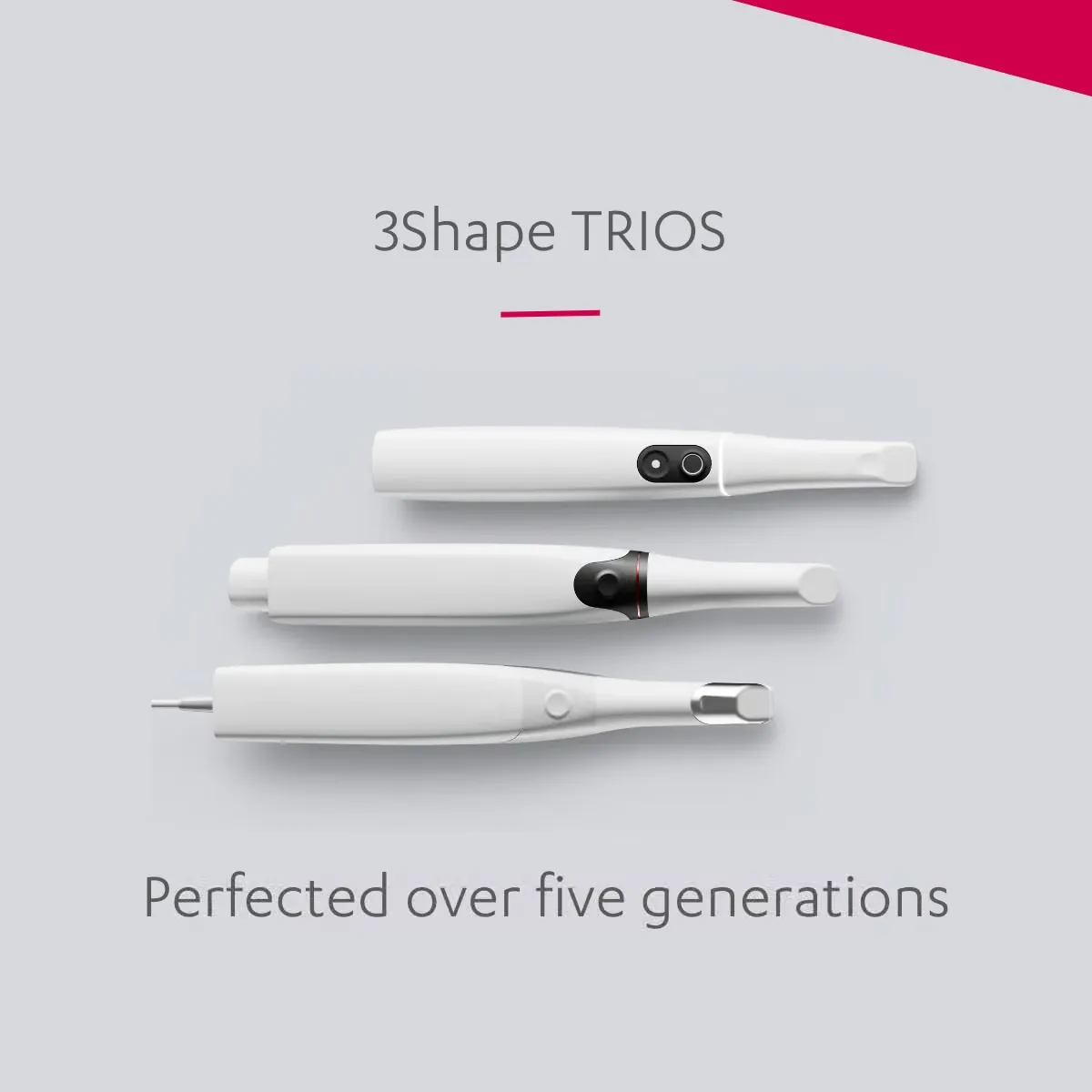
3Shape TRIOS 3 Intraoral Scanner
Digital Impression · Orthodontics & CosmeticThe 3Shape TRIOS 3 is a clinical-grade intraoral scanner that captures a precise 3D model of your teeth in about ten minutes. There are no putty trays, no gagging, and no waiting for impressions to set. The scan is immediately accurate and feeds directly into the Invisalign ClinCheck planning system, reducing error at every step.
TRIOS 3 is manufactured by 3Shape, a Danish dental technology company whose scanners are used in specialist orthodontic practices globally. The sensor uses a combination of confocal imaging and structured light to capture up to 3,000 full-colour frames per second, producing a detailed full-arch scan in under a minute. At The Dental House, every aligner case and smile makeover begins with a TRIOS scan. The digital model replaces the traditional alginate impression that most patients find uncomfortable, and because the data is digital, it can be shared instantly with the lab or aligner provider without physical transit.
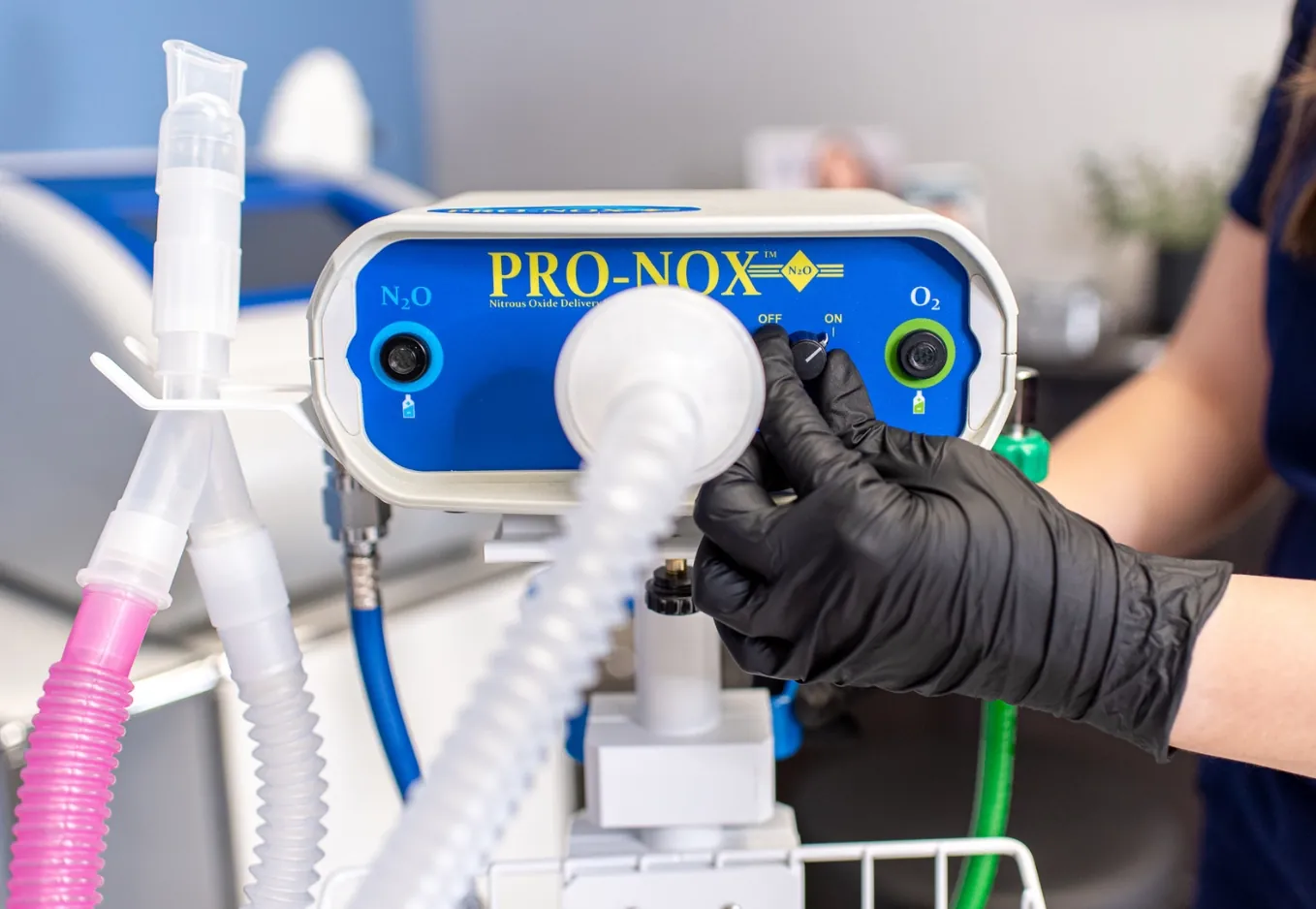
NOX Nitrous Oxide Sedation Unit
Conscious Sedation · Anxiety ReliefNOX nitrous oxide sedation, also known as laughing gas or happy gas, provides conscious sedation for anxious patients, children who need longer procedures, or anyone who finds dental treatment stressful. You remain fully awake and in control, but calm, with heightened pain tolerance. It wears off within five minutes of stopping.
Nitrous oxide has been used in dentistry for over 150 years and remains the safest form of sedation available in a dental clinic. The NOX unit delivers a precise, titrated mixture of nitrous oxide and oxygen through a soft nasal mask. Unlike oral sedation or IV sedation, nitrous takes effect in about 60 to 90 seconds, can be adjusted in real time by the dentist, and reverses immediately when the mask is removed. There is no lingering drowsiness, which means you can drive yourself home and return to work the same day. At The Dental House, NOX is used for anxious adults, for longer procedures where staying still is uncomfortable, and for children who need treatment but are not ready for an unmedicated visit.
Painless treatment
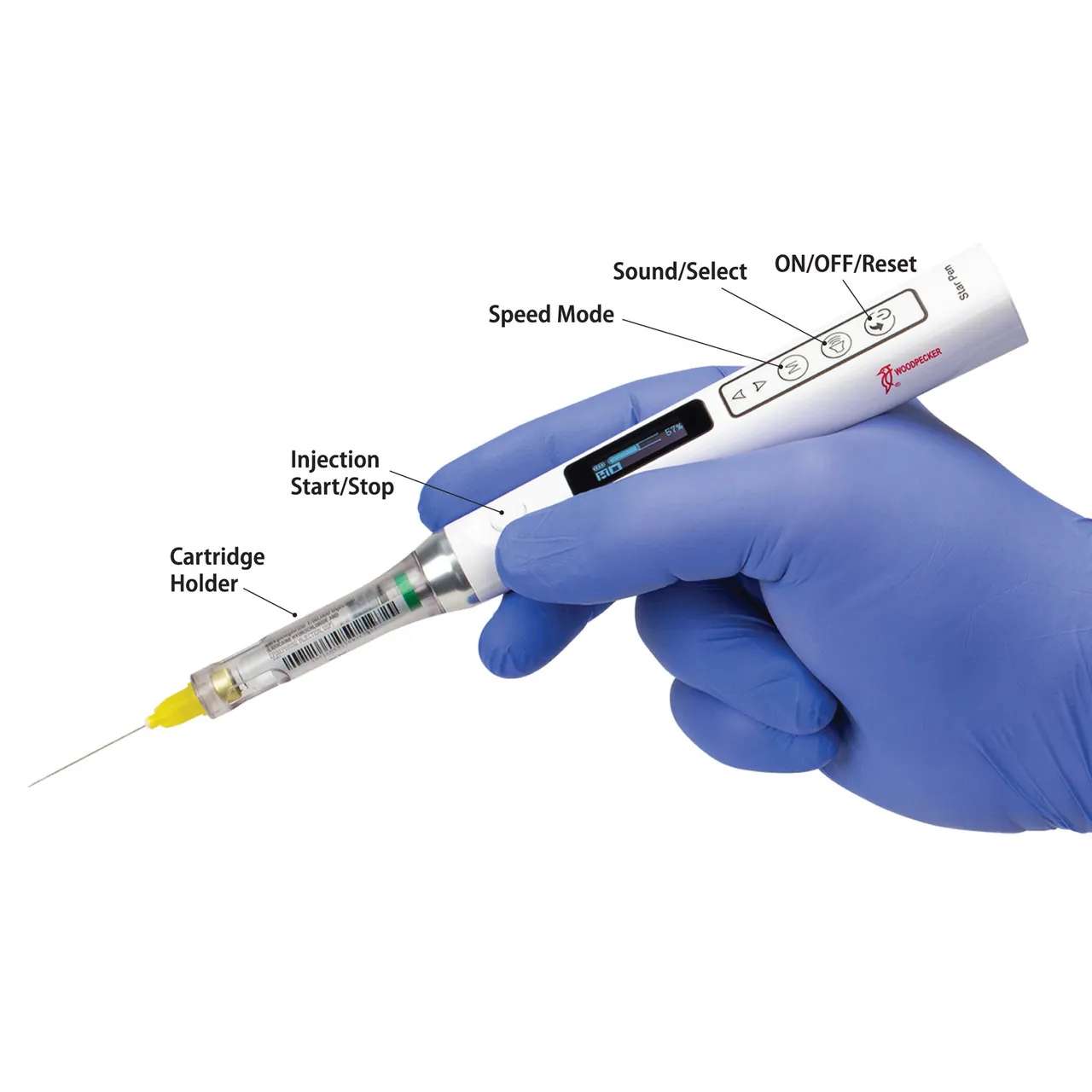
Woodpecker Starpen Computer-Controlled Anaesthesia
Pain-free Injection · Endodontics & GeneralThe Woodpecker Starpen delivers local anaesthetic through a computer-controlled micromotor that regulates the injection pressure and speed precisely. The result is a near-painless injection even for the palate and lower jaw, where conventional injections are often described as sharp and uncomfortable.
The Starpen works by delivering anaesthetic at a slow, constant, computer-controlled rate rather than a quick push. When anaesthetic is injected too quickly, it causes a burning, stinging sensation as it distends the tissue faster than it can accommodate. The Starpen eliminates this by metering the flow to match the tissue's capacity. The handpiece is also thin and pen-shaped rather than syringe-shaped, which removes the visual anxiety that the sight of a large syringe creates in many patients. Dr Niti uses the Starpen for all injections at The Dental House, including palatal injections for upper teeth and inferior alveolar blocks for lower molar root canals.
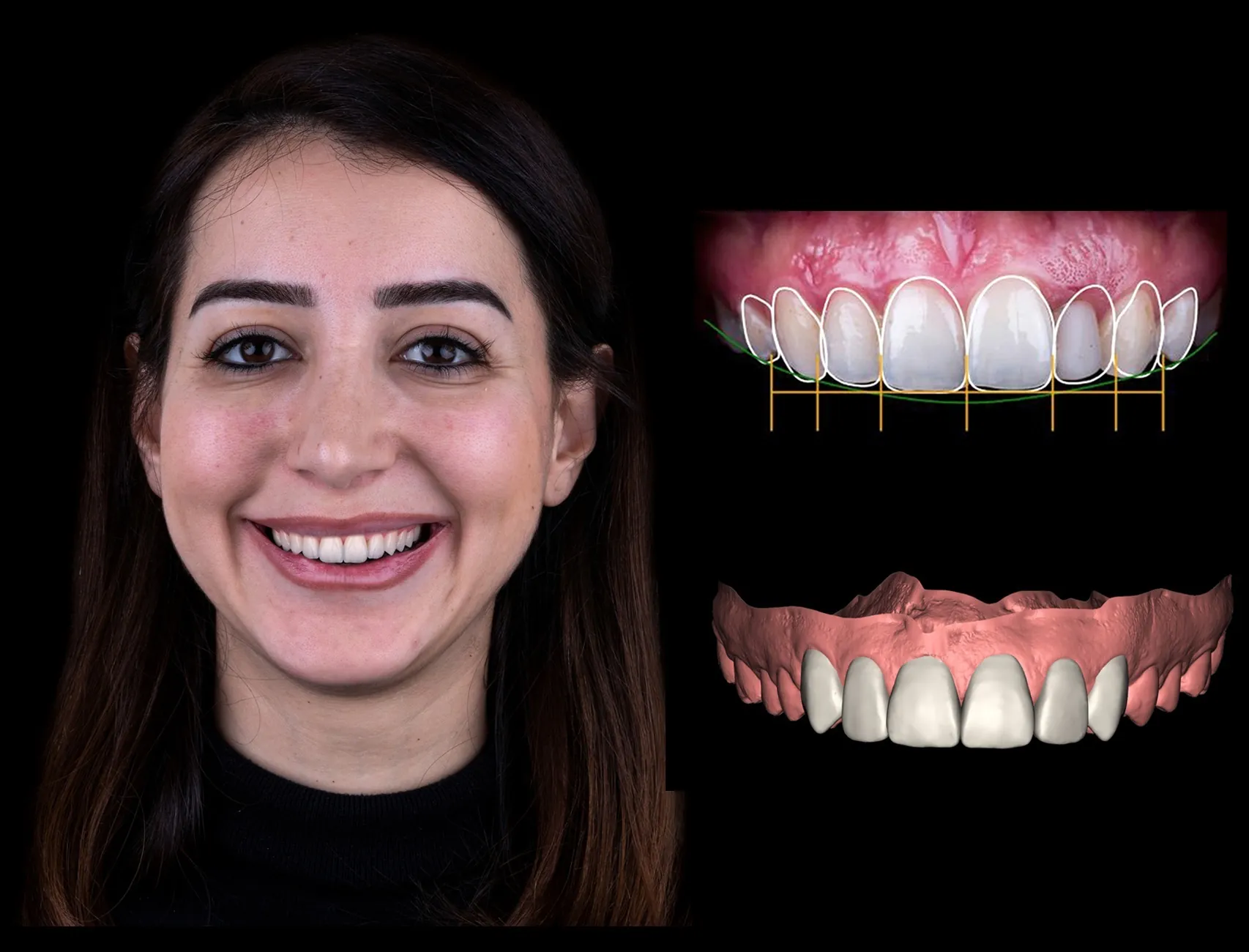
DTS Pro Smile Simulation System
Digital Preview · Cosmetic & OrthoDTS Pro is a chairside digital simulation system that shows you an accurate preview of how your teeth will look after treatment — before any irreversible step is taken. It is used for veneer planning, smile makeovers, and aligner cases where the aesthetic result matters as much as the clinical one.
DTS Pro generates a superimposed simulation on a photo of your actual teeth and face, showing proposed tooth positions, shapes and shades. Unlike a printed mock-up or a simple photoshop, DTS Pro integrates the simulation with the clinical measurements from the scan and the treatment plan, making it a more accurate representation of a realistic outcome rather than an idealized one. At The Dental House, every veneer and smile makeover case begins with a DTS Pro preview. The patient approves the digital result before any tooth preparation begins. This eliminates the most common source of dissatisfaction in cosmetic cases, which is the gap between patient expectation and clinical result.
Root canal precision
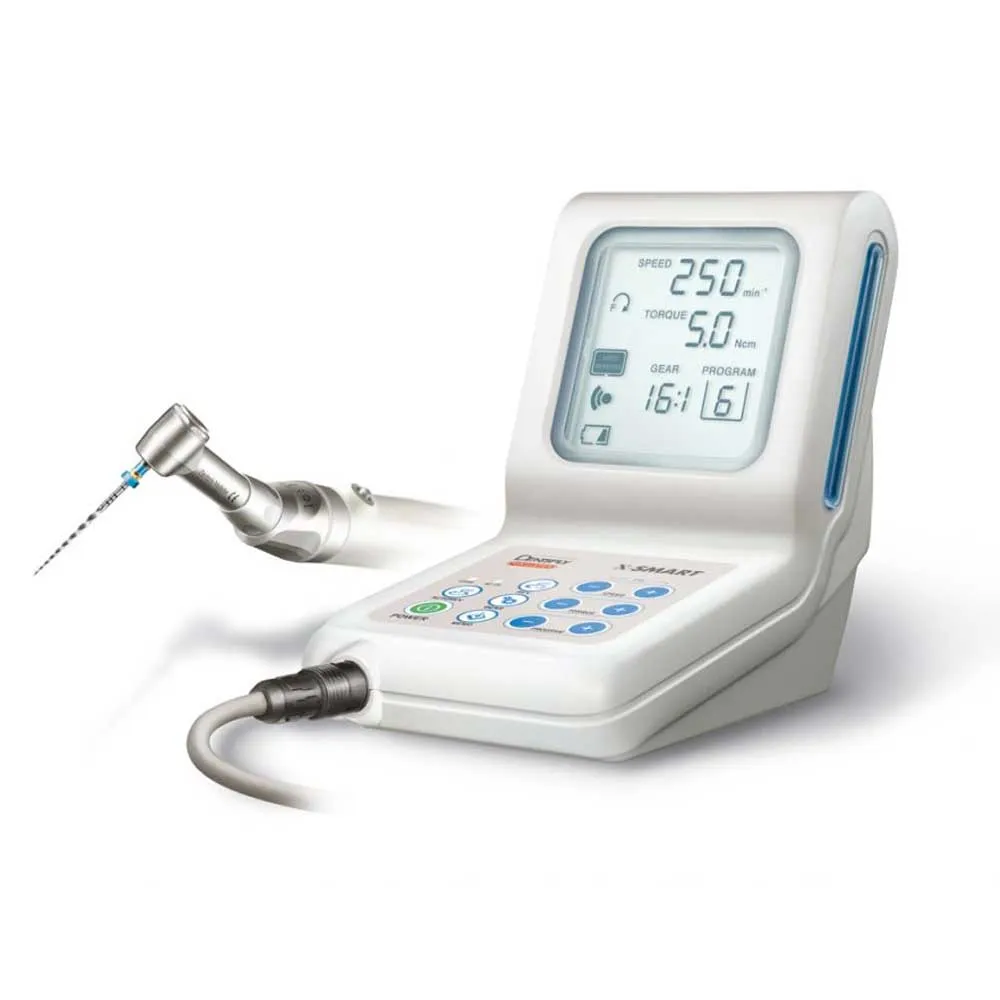
Dentsply Sirona Rotary Endomotor
Root Canal · EndodonticsThe Dentsply Sirona endomotor drives nickel-titanium rotary files that clean and shape the root canals in a fraction of the time needed for manual filing. The result is a more thorough clean, a more precise shape, and a root canal that usually finishes in a single sitting.
Dentsply Sirona is one of the two largest dental equipment manufacturers in the world. Their endomotor systems are used in specialist endodontic practices globally. The rotary system works by spinning flexible NiTi files at a controlled speed and torque, allowing them to follow the natural curve of the root canal without straightening or perforating it. Dr Niti performs all root canals at The Dental House using the Dentsply rotary system. Combined with the i-Root apex locator to confirm working length and thorough irrigation, the protocol produces a clean, well-shaped, well-sealed canal that resists reinfection.
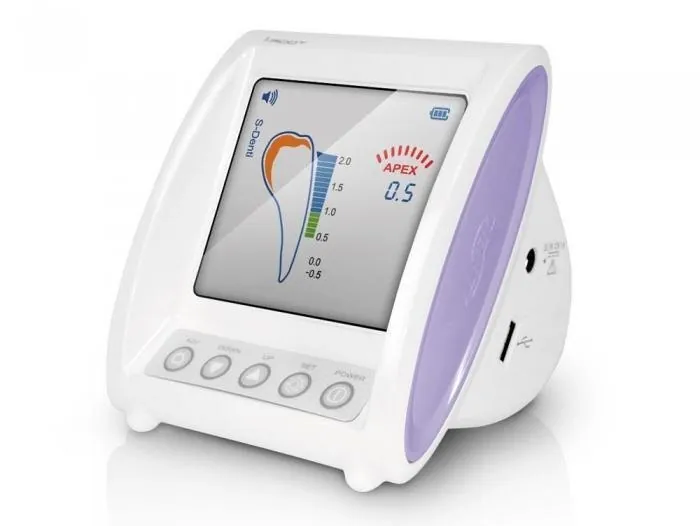
i-Root Apex Locator
Root Canal Precision · EndodonticsThe i-Root apex locator uses electronic impedance measurement to pinpoint the exact tip of the root canal without guesswork. Knowing the precise working length means the canal is cleaned all the way to the end but never beyond it, which protects the surrounding bone.
Working length determination is one of the most critical measurements in root canal treatment. If a file goes too short, the bacteria at the tip are left behind and the infection persists. If it goes too long, the file perforates the apex and damages the surrounding tissue. For decades this was estimated from X-rays, which have inherent distortion. The apex locator measures electrical impedance along the file as it advances, which changes predictably at the exact apical constriction. Modern apex locators like the i-Root are accurate to within 0.5mm in over 95% of cases. Dr Niti uses the apex locator on every root canal at The Dental House, cross-referenced with a digital X-ray.
Imaging and radiography
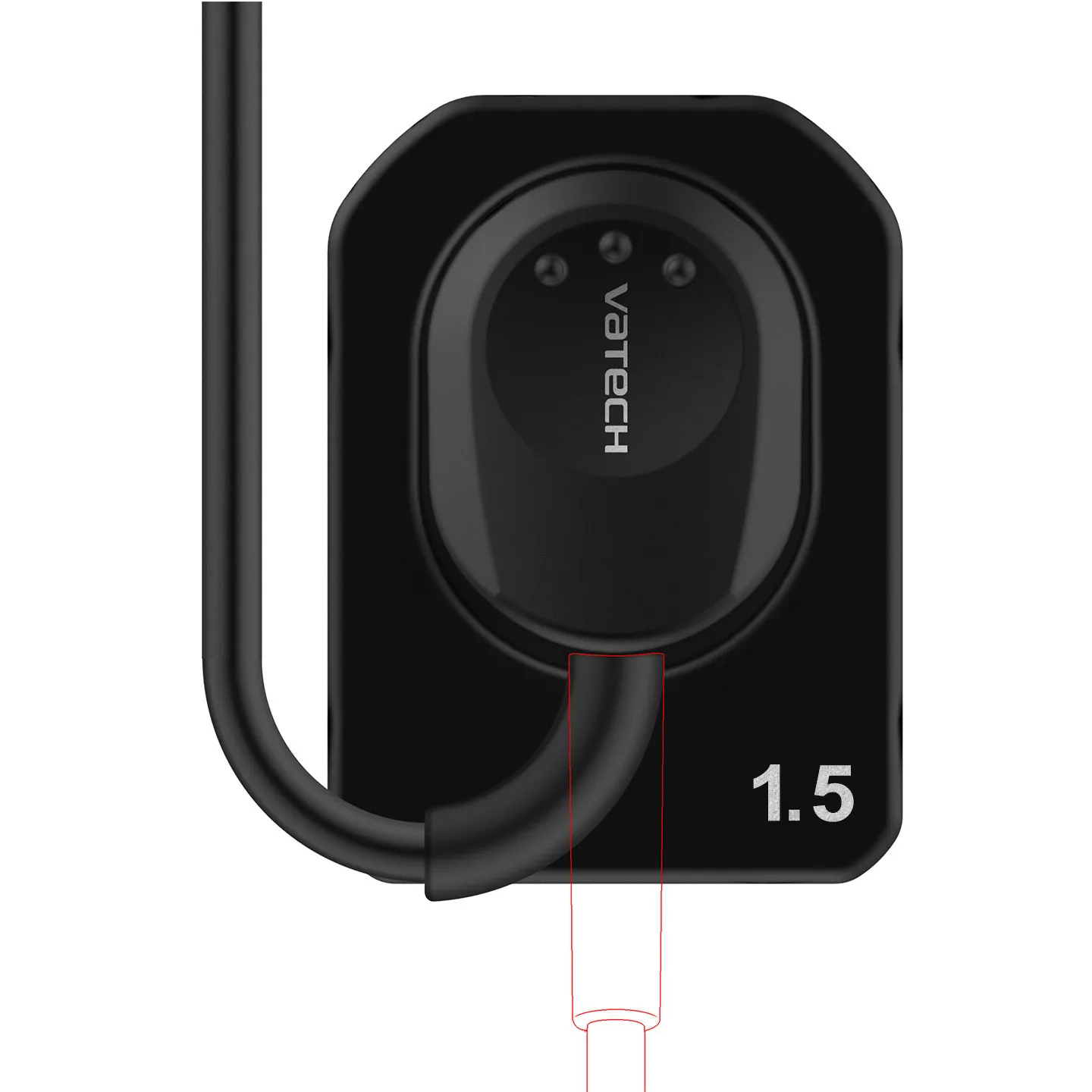
Vatech EzSensor RVG Digital Radiography
Imaging · Diagnosis & Treatment PlanningThe Vatech RVG sensor replaces conventional dental X-ray film with a digital sensor that captures a sharp image instantly and at significantly lower radiation dose than film. Images appear on screen in two seconds and can be zoomed, adjusted and measured precisely.
Vatech is a South Korean dental imaging company. The EzSensor uses a CMOS active pixel sensor to capture X-ray images with a radiation dose reduction of 60 to 80 percent compared to conventional film X-rays. For a patient who needs several radiographs during a root canal or implant planning session, this reduction adds up. The digital images are also sharper and can be magnified and windowed on screen in real time, which aids diagnosis. At The Dental House, the Vatech sensor is used for periapical radiographs, bitewing radiographs, and working-length verification during root canal treatment.
Restorative and bonding
3M Elipar Curing Light
Restorative · Fillings & BondingThe 3M Elipar curing light polymerises resin composite in high-intensity bursts, producing harder, more durable fillings and bonded restorations than lower-output lights achieve. Proper curing is invisible but determines how long a filling lasts.
3M is among the most recognised names in restorative dentistry globally. The Elipar series uses LED technology to deliver 1,000 to 2,000 mW/cm² of light at the precise wavelengths that activate the photoinitiators in resin composite. An incompletely cured composite is softer, more prone to fracture, and more likely to stain and debond. The curing light also activates the bonding resin that holds veneers and crowns in place. At The Dental House, the Elipar is used for all composite fillings, veneer bonding and any adhesive restoration where long-term durability is the goal.
Implant surgery
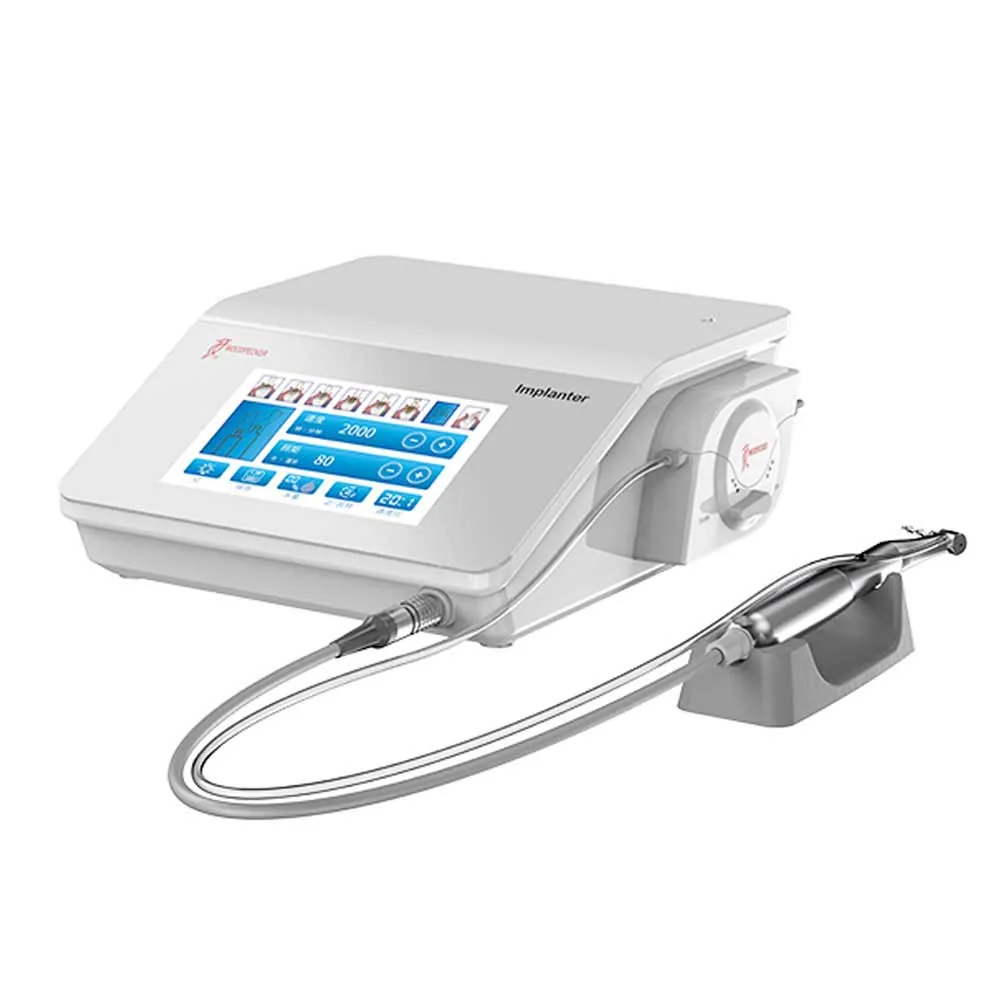
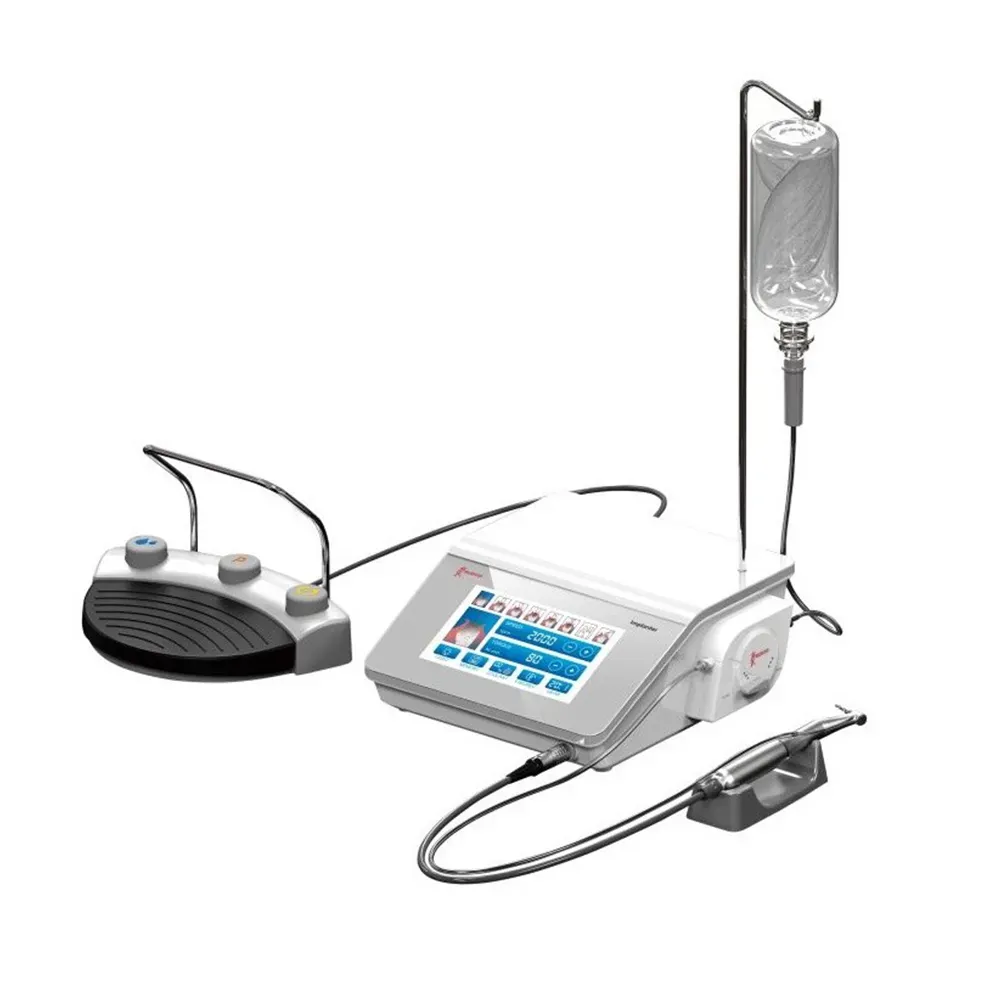
Woodpecker Implant Motor (W&H Integration)
Dental Implants · Oral SurgeryThe Woodpecker implant motor provides torque-controlled, speed-regulated drilling and implant placement, ensuring each step in the surgical protocol is performed within the parameters the implant system specifies. Correct torque at final placement is one of the most critical factors in implant primary stability.
Implant surgery requires drilling through bone at precise speeds with controlled force and continuous saline irrigation to prevent heat damage to the bone cells. Damaged bone around the implant site leads to poor osseointegration and implant failure. The Woodpecker motor delivers controlled torque from 10 to 70 Ncm, adjustable at each stage of the osteotomy protocol. Dr Hitesh uses this system for all implant placements at The Dental House, following a Vatech RVG-guided protocol with case-specific drilling sequences.
Scaling and periodontics
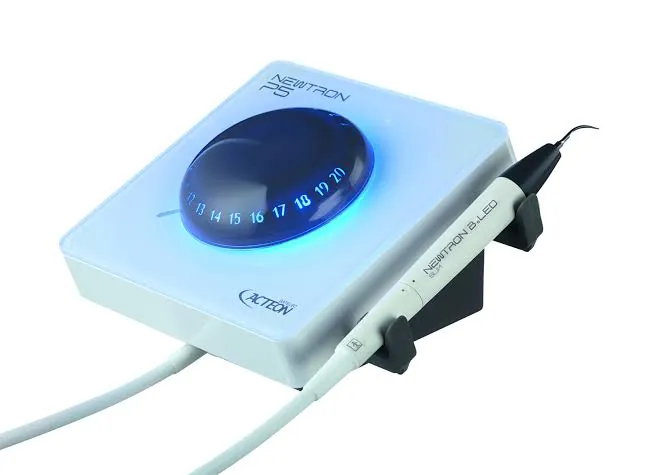
Acteon Satelec Piezo Ultrasonic Unit
Scaling · Periodontics & SurgeryThe Acteon Satelec piezo unit uses ultrasonic vibration at up to 36,000 cycles per second to disrupt and remove calculus (hardened tartar), biofilm and subgingival deposits far more effectively than manual scalers alone. It is used for professional teeth cleaning, deep scaling in gum disease, and precision surgical procedures.
Acteon is a French dental ultrasonic technology company whose Satelec brand is used in specialist periodontic and endodontic practices globally. The piezo unit generates ultrasonic oscillation in the tip, which disrupts the crystalline structure of calculus and biofilm through cavitation and microstreaming, as well as the mechanical vibration of the tip itself. Unlike sonic scalers, piezo instruments vibrate in a precise linear motion that can be controlled for delicate subgingival work. At The Dental House, the Satelec is used for all scaling and polishing appointments, for deep periodontal debridement in gum disease cases, and for surgical preparation where precision is needed.
See the equipment in person
Book a consultation and see the clinic and its equipment for yourself. Consultation fees ₹300. Open every day, 9am to 9pm.